Our Solutions
Carbon Accounting
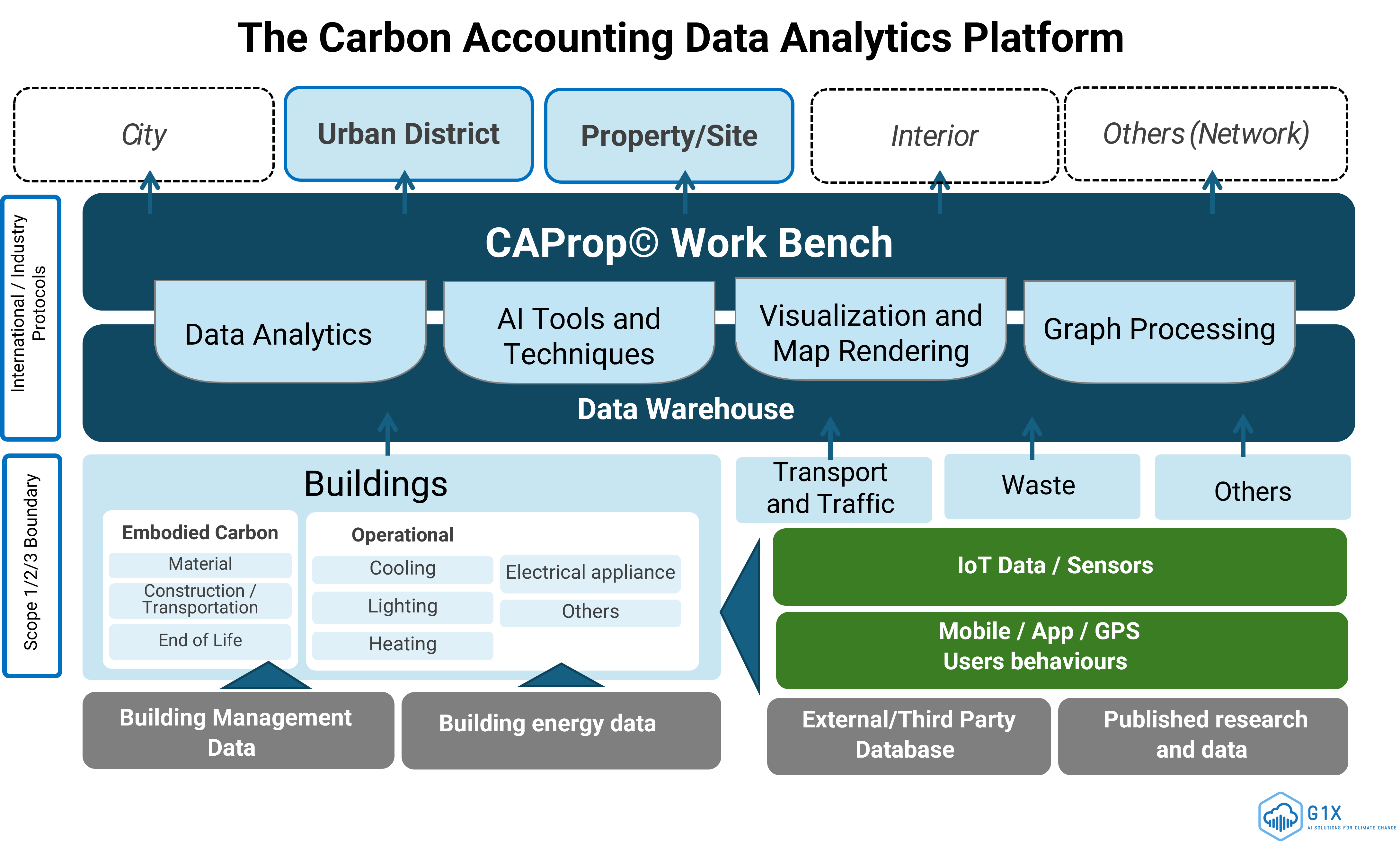
Our carbon accounting solutions CARP© (Carbon Accounting for Real Properties) is an AI driven Data-as-a-Service (DaaS) / Program-as-a-Service (SaaS) products/platforms of carbon accounting tool tailored designed for use by urban planners, urban designers and related professionals, for projects at urban district and granular asset specific spatial level.
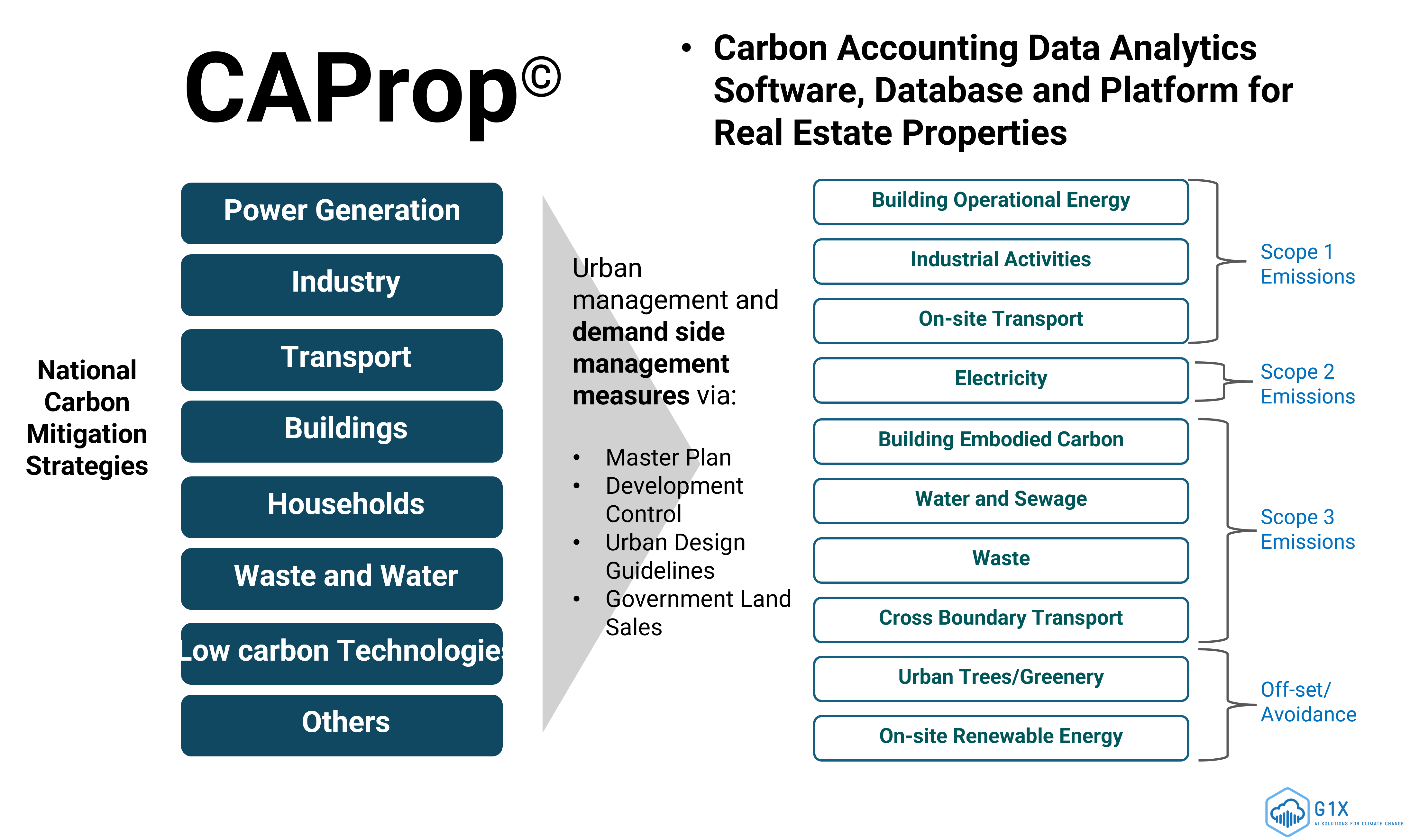
CARP© can assess, calculate, simulate and predict the Scope 1,2 and Scope 3 emissions, at granular asset specific level.
- Compare carbon footprint and energy usage of different urban districts, buildings, infrastructure, facilities and assets.
- Identify unique and data evidenced decarbonization solutions to the climate and energy consumption problem, and prioritize planning, urban retrofit and other mitigation or district scale energy saving solutions through policy and investment decisions.
- The use of AI driven data analytics to enable the users to self-manage the tools to estimate energy and carbon emissions based on big data, using machine learning models and city 3 D digital twins.
- Visualization and reporting to facilitate stakeholders’ discussions, public participation and education on climate change issues.
Climate Risks and Resilience
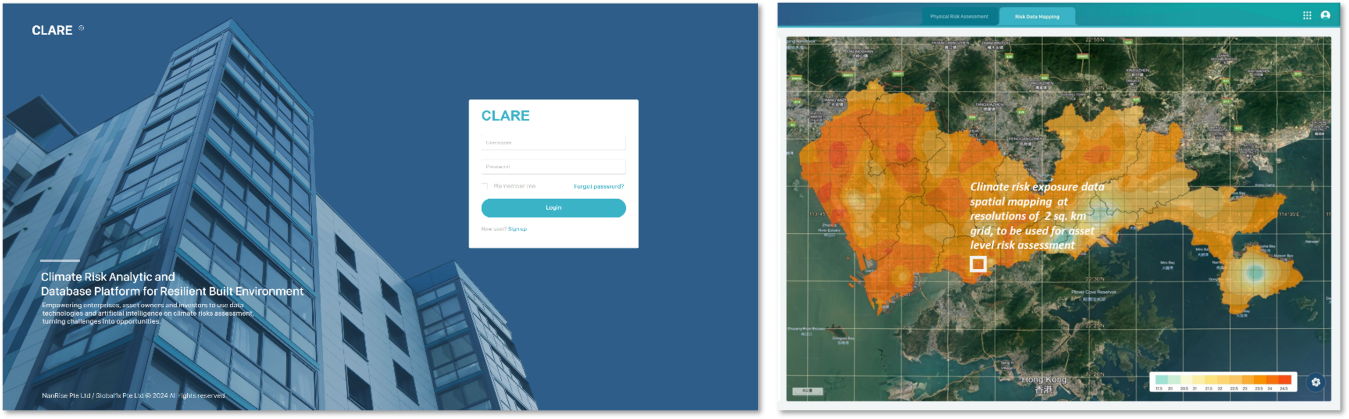
Our solutions CLARE© (Climate Risk Analytics for Resilient Environment) is an AI driven Data-as-a-Service (DaaS) / Program-as-a-Service (SaaS) products/platforms which can support risk management decisions by the users over different timelines, based on different future climate change scenarios.
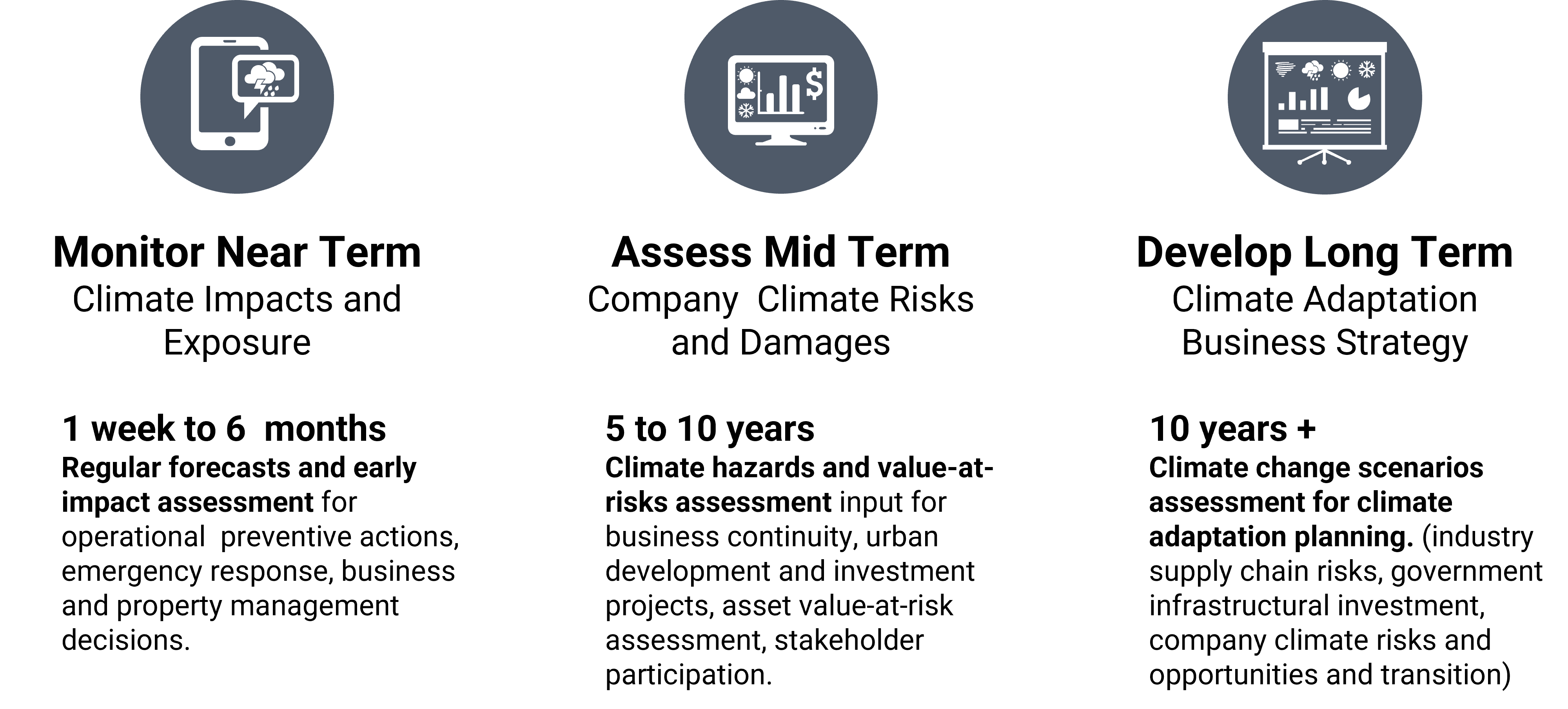
CLARE© our climate risk assessment products and solutions will empower the banking and financial institutions, investors, asset owners and communities to self-assess and manage their climate risks. They will be able to:
- Map the site-specific asset climate risks impacts based on future global climate change scenarios, at local district and building level;
- Quantify the physical impacts of climate hazards based on 3-D city digital twins, city big data and digital impact models;
- Measure the financial and social impacts of the risks;
- Evaluate and prioritize cost-effective risk mitigation business decisions;
- Generate visualization interface and reports for board meetings, internal capacity building, stakeholder discussions as well as any mandatory/voluntary disclosure and reporting requirements.